A wooden handrail is touched every day.
That means it collects dust, skin oils, marks, and wear faster than most parts of a staircase. Good care keeps the timber smooth, safe, and pleasant to use.
Here is the key point.
Wooden handrail maintenance is not just cleaning. It also means checking the finish, fixing loose parts, protecting the wood, and knowing when a deeper repair is due.
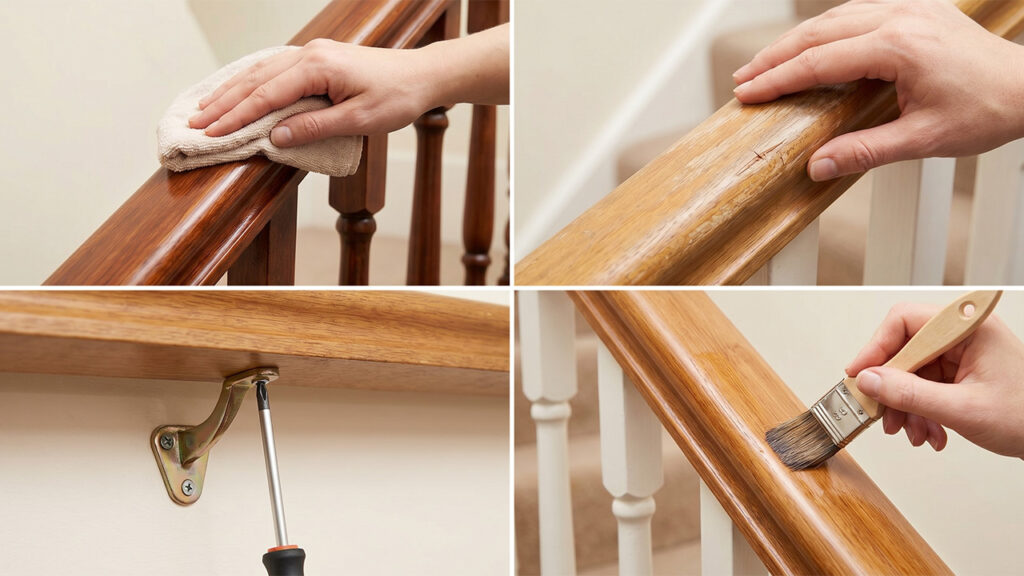
This guide covers each step in plain terms.
Why wooden handrail maintenance matters
A handrail has two jobs.
It must look right in the space. It must also give firm support. When the surface turns sticky, dull, cracked, or loose, both comfort and safety can suffer.
Regular care helps to:
- Remove dust, grease, and hand marks
- Protect the timber finish
- Reduce scratches and water damage
- Spot loose brackets early
- Keep the handrail safe to grip
- Extend the life of the staircase
A small routine can prevent larger work later.
And that matters with timber.
Wood is strong, but it reacts to moisture, heat, sunlight, and poor cleaning products. The wrong care can strip the finish or raise the grain.
What you need before cleaning
Start with simple tools. Avoid harsh products.

| Item | Why it helps |
|---|---|
| Soft microfibre cloth | Lifts dust without scratching |
| Mild washing-up liquid | Cleans light grease |
| Warm water | Helps remove daily grime |
| Dry lint-free cloth | Stops moisture sitting on the wood |
| Soft brush | Reaches grooves and carved detail |
| Wood polish or conditioner | Helps protect some finishes |
| Fine sandpaper | Useful for small rough spots |
| Gloves | Good for polish, oil, or deeper cleans |
A quick note.
Do not use bleach, ammonia, abrasive pads, steam cleaners, or soaking wet cloths. They can harm the finish and the timber below.
Step 1: Identify the finish first
Before you clean, check the handrail finish.
This matters because wax, oil, varnish, and lacquer need different care. A product that suits one finish may damage another.
Common wooden handrail finishes
| Finish | Look and feel | Care tip |
|---|---|---|
| Varnish | Smooth, sealed, often glossy | Wipe with a lightly damp cloth |
| Lacquer | Hard, smooth, clear coating | Avoid strong solvents |
| Oil | Natural feel, lower sheen | Needs fresh oil over time |
| Wax | Soft sheen, warm feel | Buff and re-wax when dull |
| Paint | Coloured surface | Use mild soap only |
| Stain with sealant | Shows grain with added tone | Clean gently and dry fast |
Not sure what finish you have?
Use the mildest method first. Dust it. Wipe a small hidden area with a barely damp cloth. Dry it at once. Check for dulling, tackiness, or colour transfer.
For valuable, listed, or hand-carved timber, ask a joinery specialist before using any new product.
Step 2: Dust the handrail each week
Dust looks harmless.
It is not.
Fine grit can scratch the finish when hands pass over it. Weekly dusting keeps the surface clean and reduces the need for heavy cleaning.
Use a dry microfibre cloth. Work along the grain. For carved handrails, scrolls, grooves, or spindles, use a soft brush.
The simple rule is this.
Clean with the grain, not against it.
Step 3: Clean light marks safely
For normal marks, use a mild soap mix.
Add a small drop of washing-up liquid to warm water. Dip in a soft cloth. Wring it out well. The cloth should feel damp, not wet.
Wipe the handrail in small sections.
Then dry each section with a clean cloth. Do not let water sit on the surface.
Safe cleaning method
- Dust the handrail first.
- Mix mild soap with warm water.
- Wring the cloth until almost dry.
- Wipe along the wood grain.
- Clean sticky areas with light pressure.
- Dry the surface at once.
- Buff gently with a dry cloth.
That is enough for most indoor handrails.
How to clean a sticky wooden handrail
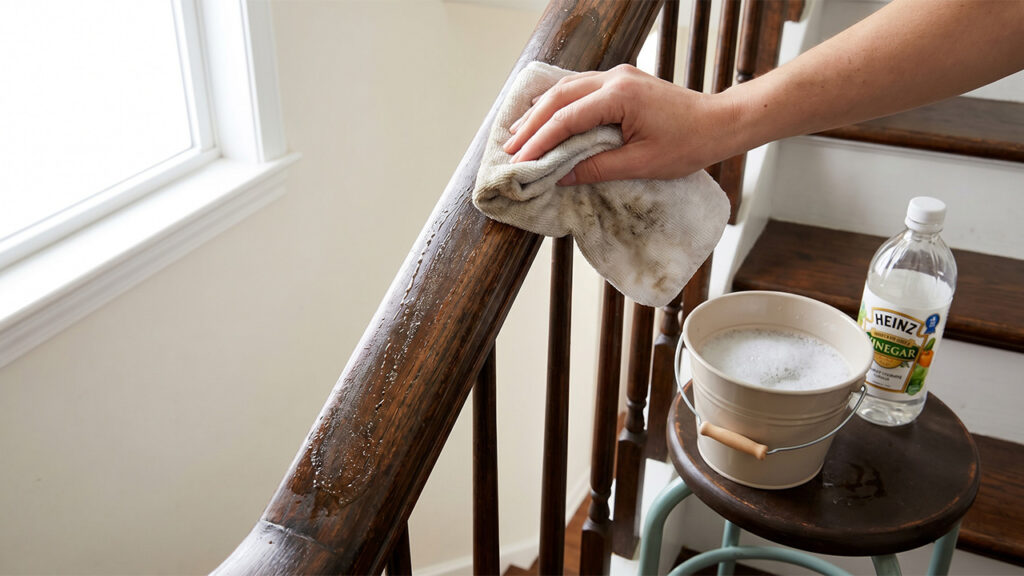
A sticky handrail is common.
It often comes from hand oils, cleaning residue, humidity, or old polish. It can also happen when wax has built up over time.
Start with mild soap and warm water.
Still sticky?
Try a small test patch with a weak white vinegar mix. Use one part white vinegar to four parts water. Wipe lightly, then dry at once.
Do not soak the wood.
A sticky feel that returns fast may point to failed polish, soft wax build-up, or a damaged finish. In that case, cleaning alone may not solve it.
How often should you clean a wooden handrail?
Most homes need a simple routine.
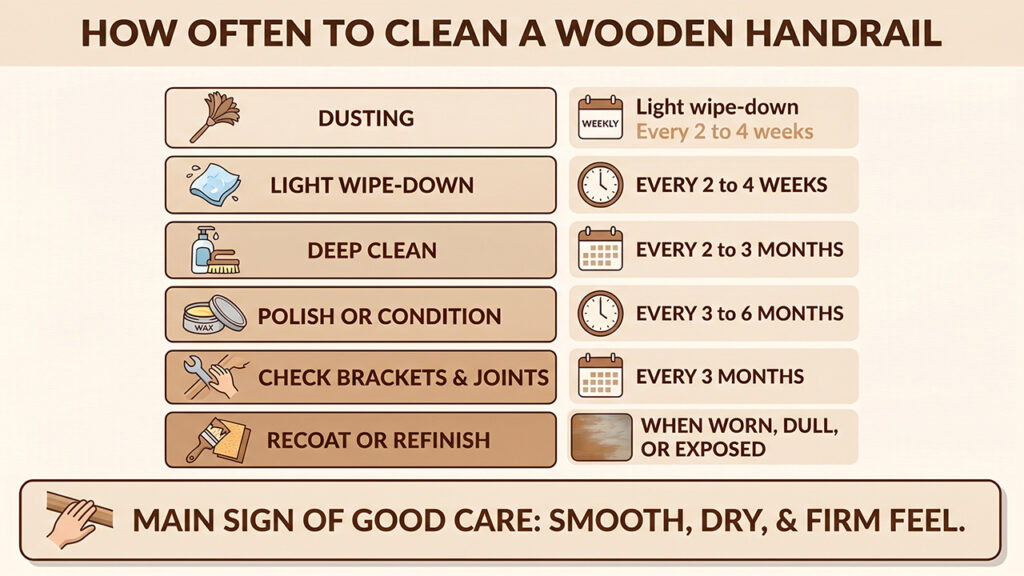
High-traffic homes need more care. Homes with children, pets, or outdoor access may need it too.
| Task | Suggested frequency |
|---|---|
| Dusting | Weekly |
| Light wipe-down | Every 2 to 4 weeks |
| Deep clean | Every 2 to 3 months |
| Polish or condition | Every 3 to 6 months |
| Check brackets and joints | Every 3 months |
| Recoat or refinish | When worn, dull, or exposed |
This is a guide, not a fixed rule.
The handrail should feel smooth, dry, and firm. That is the main sign of good care.
Interior vs exterior wooden handrail maintenance
Indoor and outdoor handrails need different care.
An indoor handrail deals with skin oils, dust, and light wear. An outdoor handrail must also face rain, frost, UV light, and changes in heat.
Indoor wooden handrails
Indoor rails need gentle cleaning and finish care.
Keep the surface dry. Avoid placing wet coats, plants, or damp cloths near the staircase. Try to keep indoor humidity steady.
This helps prevent swelling, cracks, and dull patches.
Outdoor wooden handrails
Outdoor rails need more frequent checks.
Look for:
- Fading from sun
- Green growth
- Black spots
- Raised grain
- Cracks
- Soft patches
- Peeling finish
- Loose fixings
Clean outdoor rails with care. Remove dirt with a soft brush first. Use a mild wood cleaner when needed. Dry the rail well.
Then check the coating.
Exterior timber often needs fresh oil, stain, or sealant more often than indoor wood. In the UK, autumn is a good time to check it, before cold and wet weather sets in.
Seasonal wooden handrail maintenance schedule
A seasonal plan makes care easier.
It also helps you spot problems before they grow.
| Season | What to do |
|---|---|
| Spring | Deep clean. Check for winter damp. Touch up worn finish. |
| Summer | Watch for sun fade. Clean sticky marks. Check outdoor rails. |
| Autumn | Oil or seal exterior timber. Tighten brackets. Clear dirt. |
| Winter | Keep rails dry. Watch for swelling, cracks, and loose fixings. |
Here is the key point.
Short checks are better than rare heavy work.
How to polish or condition a wooden handrail
Polish can restore a dull handrail.
But use the right product for the finish.
A varnished or lacquered rail may only need gentle buffing. An oiled rail may need a fresh coat of suitable wood oil. A waxed rail may need thin wax and careful buffing.
Use less product than you think.
Too much polish can leave the rail greasy. It can also attract dust. Apply a thin layer with a soft cloth. Let it settle as directed. Buff until the rail feels smooth and dry.
Avoid silicone-based sprays unless the maker says they are safe. They can make later refinishing harder.
How to remove scratches and scuffs

Light scuffs are often surface marks.
Try cleaning first. Then buff with a dry cloth.
For small scratches, use a suitable wood touch-up product in a close colour match. Test it first in a hidden area.
For rough patches, light sanding may help.
Use fine-grit paper and work with the grain. Do not sand across the rail. Remove dust after sanding. Then reapply the right finish.
Deeper cuts need more care.
A carved, curved, or heritage handrail should be repaired by a skilled craftsperson. This helps protect the profile and detail.
Sanding and refinishing a wooden handrail
A worn handrail may need more than a clean.
Signs include:
- Grey or dry timber
- Bare patches
- Peeling varnish
- Rough grip areas
- Deep stains
- Old sticky finish
- Uneven colour
Refinishing restores the surface. It also protects the timber.
Basic refinishing steps
- Remove dust and surface dirt.
- Protect nearby walls, carpet, and stairs.
- Lightly sand with the grain.
- Use finer grit for a smooth feel.
- Remove all sanding dust.
- Apply stain, oil, wax, or varnish.
- Let each coat dry fully.
- Lightly de-nib between coats if needed.
- Check the grip feels smooth and safe.
Do not rush drying times.
A finish that feels dry on top may still be soft below. Using the handrail too soon can leave marks.
How to fix a loose or wobbly handrail
A loose handrail is a safety issue.
Do not ignore it.
Start by checking the brackets. Loose screws can often be tightened. If a screw spins and will not grip, the fixing may need repair.
Look at the wall too.
A bracket fixed into weak plaster will not hold well. It may need stronger plugs, better fixings, or a move into solid timber or masonry.
When to call a professional?
Get help when:
- The handrail moves under light pressure
- Brackets have pulled from the wall
- The newel post feels loose
- The timber is cracked near a fixing
- The rail is part of a listed staircase
- The repair affects safety or compliance
A handrail should feel firm under normal use.
That is not optional.
Wood type and care needs
Different timbers age in different ways.
This affects wooden handrail maintenance.
| Wood type | Common traits | Care advice |
|---|---|---|
| Oak | Hard, durable, strong grain | Oil or seal well. Avoid dark water marks. |
| Pine | Softer, easier to dent | Use gentle pressure. Protect from knocks. |
| Ash | Tough, pale, elastic | Keep clean and sealed. Watch for grime in grain. |
| Walnut | Dark, rich, refined | Avoid harsh cleaners. Protect from strong sun. |
| Mahogany | Dense, warm-toned | Polish with care. Avoid excess moisture. |
Oak handrails are common in UK homes.
They are strong, but they still need care. Water marks, black staining, and finish wear can occur when the surface is neglected.
Building regulations and safety checks
A handrail is not just a design detail.
It is a safety feature.
In the UK, staircase handrails must meet rules on height, grip, and safe use. This is most vital in rental homes, public spaces, commercial buildings, and listed properties.
Maintenance should include safety checks.
Look for:
- Loose movement
- Sharp splinters
- Cracked joints
- Weak brackets
- Poor grip
- Gaps that feel unsafe
- Wear that affects support
A worn finish is one thing.
A weak handrail is another. Repair it before it becomes a risk.
For listed or period homes, keep repairs sensitive to the original staircase. Match the timber, profile, and finish where possible.
Eco-friendly wooden handrail maintenance
Natural care can work well.
But it must suit the finish.
Some homeowners prefer beeswax, natural oils, or low-VOC finishes. These can be good choices for indoor air quality and a softer look.
Use them with care.
Linseed oil, tung oil, and beeswax each behave in a different way. Some can darken the timber. Some need long drying times. Some are not right over sealed varnish.
Always test first.
For bespoke or older joinery, ask for guidance before applying a new finish.
Maintenance for commercial and high-traffic spaces
Busy spaces need a stricter routine.
Hotels, schools, offices, shops, and shared buildings see far more hand contact. Dirt builds up fast. Wear also appears sooner.
A good plan should include:
- Daily or regular wipe-downs
- Scheduled deep cleaning
- Hygiene-safe products
- Slip-free, dry finishes
- Regular fixing checks
- Fast repair of loose rails
- Records for inspections
The aim is simple.
Keep the rail clean, dry, smooth, and secure.
For workplaces, product choice may also need to follow COSHH rules. Staff should know how to use cleaning products safely.
Common wooden handrail maintenance mistakes
Small mistakes can cause lasting damage.
Avoid these:
- Using too much water
- Leaving the rail damp
- Cleaning with bleach
- Using abrasive pads
- Applying polish too often
- Mixing oil, wax, and varnish without checks
- Ignoring loose brackets
- Sanding across the grain
- Recoating over dirt or grease
- Using outdoor products indoors without care
The biggest mistake is simple.
Treating all wood finishes the same.
When to replace instead of repair
Maintenance has limits.
A handrail may need replacement when the timber is no longer sound. This is often safer than repeated short-term repairs.
Replace the handrail when you see:
- Deep rot
- Severe cracks
- Long splits
- Failed joints
- Repeated loosening
- Poor grip shape
- Major water damage
- Unsafe fixings
- Damage near support points
There is also a design point.
Some old handrails are too worn or poorly fitted to meet modern needs. A new handrail can match the home while improving safety.
Wooden handrail maintenance checklist
Use this quick checklist during cleaning.
| Check | What to look for |
|---|---|
| Surface | Dust, sticky marks, dull finish |
| Touch | Rough grain, splinters, tacky areas |
| Finish | Peeling, bare patches, water marks |
| Fixings | Loose screws, moving brackets |
| Structure | Wobble, cracks, weak joints |
| Safety | Firm grip, smooth edges, stable support |
| Surroundings | Damp walls, leaks, strong sunlight |
Keep the checklist simple.
A few minutes each month can save a larger repair later.